
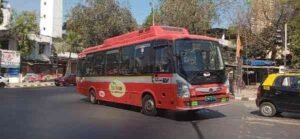
All eyes are now on November 6, 2025—a date to watch—as the government prepares to float a fresh round of e-bus tenders under the revamped FAME framework. The move is being closely monitored by the industry, not just for the size of the order book but for the structural changes it might introduce.
However, the reluctance of major OEMs to actively participate in government e-bus tenders reflects a deeper structural challenge within India’s public transport electrification framework. While the transition to cleaner mobility is a national priority, the reality on the ground is that most large manufacturers—Tata Motors, Ashok Leyland, Volvo Eicher, and even international players—are increasingly cautious about taking on projects that expose them to long-term financial and operational risks.
At the core of the problem lies the Gross Cost Contract (GCC) model, under which OEMs must own, operate, and maintain the buses for up to twelve years, receiving a fixed payment per kilometre from the state transport undertaking. The logic behind the model was sound in theory: ensure consistent service delivery while allowing the state to pay over time. In practice, however, it places the onus of fleet operations on manufacturers who are not built for that role. Running city buses across congested routes, managing drivers, maintaining uptime, and guaranteeing performance over a decade introduces enormous uncertainty. When payments are delayed—often by cash-strapped STUs—the entire cash flow equation collapses.
The financial imbalance begins at the very outset. An electric bus costs more than twice the price of a diesel equivalent. Even after central subsidies, manufacturers have to commit substantial capital to build and deploy fleets before any revenue is realised. Delays in subsidy disbursement under the FAME II scheme add further strain. Banks and NBFCs, wary of uncertain residual values and a nascent secondary market for e-buses, remain conservative in their lending. This makes the GCC model inherently capital-intensive and unattractive for companies whose business models are rooted in manufacturing and sales rather than fleet operations.
Charging infrastructure is another weak link in the chain. In many cases, tenders expect OEMs to set up and finance charging depots, including transformers, substations, and associated civil works. Obtaining land, approvals, and adequate power supply can take months, sometimes years, delaying project execution and inflating costs. The lack of standardisation across charging technologies and depot layouts further complicates matters.
Battery liability is arguably the most critical factor driving caution. With the battery representing nearly 40 per cent of a bus’s cost, its performance over time directly affects profitability. Most lithium-ion packs degrade significantly after six or seven years, necessitating replacement within the tender period. Since OEMs are contractually bound to ensure vehicle uptime, they must absorb this replacement cost—often without any price escalation clause to offset inflation or changes in technology.
The issue of delayed payments continues to erode confidence. Many STUs operate under financial stress, leading to payment backlogs that stretch over months. Coupled with bureaucratic procedures, frequent tender revisions, and cancellations, manufacturers find it difficult to build predictable business pipelines. Political transitions at the state level often bring sudden changes in priorities, further unsettling ongoing projects.
Interestingly, the market vacuum left by the big players has attracted a new breed of operators such as Olectra Greentech, JBM Auto, Switch Mobility, and PMI Electro Mobility. These companies have aligned themselves with financiers and energy infrastructure partners who are more comfortable with long-term operational exposure. Their ability to absorb higher risk has allowed them to dominate tender-based deployments in recent years. Meanwhile, established OEMs prefer to remain on the supply side—selling buses to fleet operators or participating as junior partners in consortiums rather than taking on the role of prime contractors.
Another structural flaw lies in the way tenders are evaluated. The system remains biased toward the lowest bidder (L1), compelling participants to quote unrealistically low per-kilometre rates just to stay competitive. This race to the bottom undermines quality, squeezes margins, and disincentivises innovation. In an environment of fluctuating battery prices, currency volatility, and evolving technology standards, committing to a fixed rate for a decade is both financially and strategically unsound.
Compounding these issues is policy uncertainty. The slow rollout of FAME III, coupled with inconsistent state-level EV policies, has left OEMs unsure about subsidy frameworks and long-term demand visibility. The much-publicised CESL tender for 10,000 e-buses, intended as a centralised procurement solution, has been delayed and revised multiple times, reinforcing perceptions of unpredictability.
If the new tenders succeed in addressing long-standing issues—such as risk sharing, payment security, and infrastructure readiness—it could mark a turning point in India’s e-bus ecosystem. However, if the new format continues to offload the same operational and financial risks onto OEMs, participation from the country’s largest manufacturers is likely to remain tepid.
The cumulative effect of these factors is a climate of cautious participation. Large OEMs are reluctant not because they doubt the future of electric mobility, but because the current tendering ecosystem transfers nearly all financial, technological, and operational risk to the manufacturer while offering limited reward and uncertain cash flows. Unless the government’s forthcoming tender on November 6 introduces a fairer, more balanced approach, India’s most capable manufacturers may once again watch from the sidelines as smaller, risk-tolerant players take the lead in public transport electrification.